

Thomas J. Price works across media, including sculpture, film and photography, and is engaged with issues of power, representation, interpretation and perception in society and in art.
Quote
« What if, instead of celebrating excellence, we acknowledge the ordinary?»
Sculpture “Moments Contained”
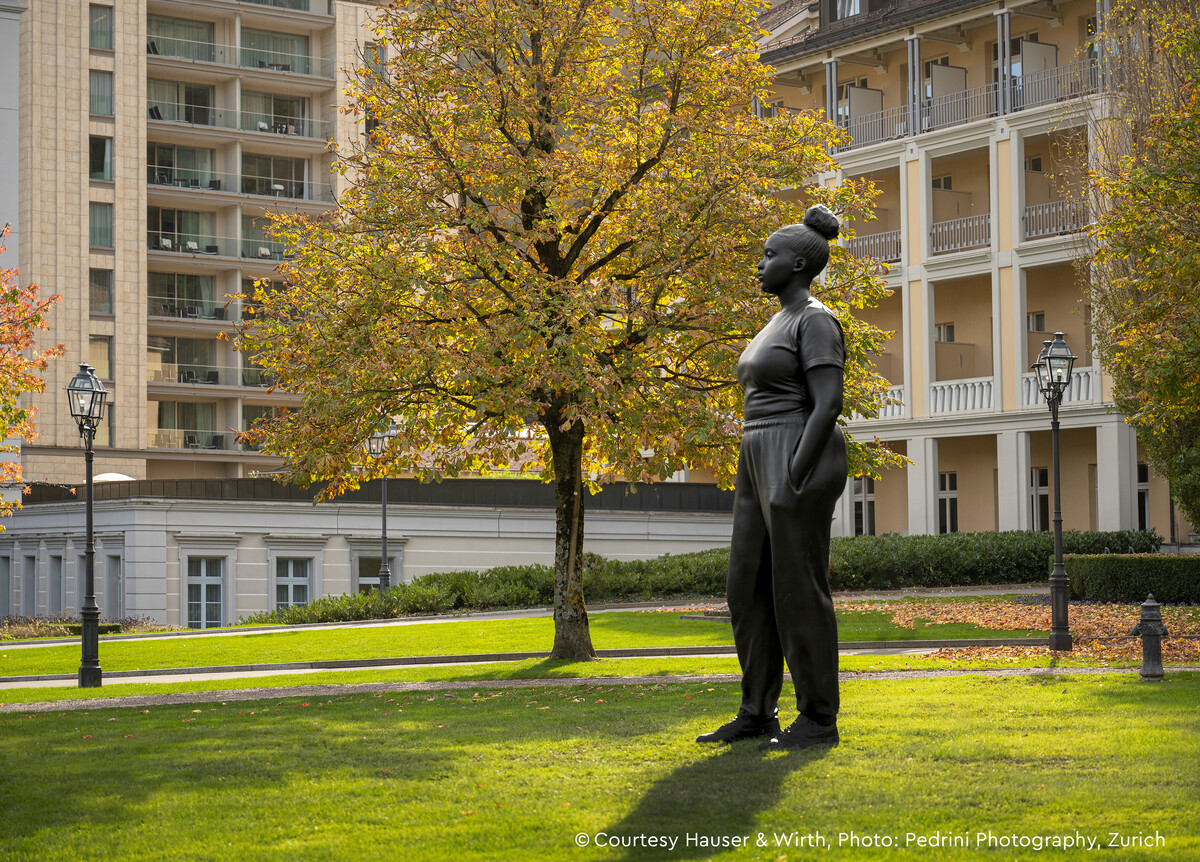
Growing up in London, Price was keenly aware of those deemed worthy of sculptural representation, both in museums and in public spaces. In “Moments Contained” (2022) Price has created an exceptional monument that reassesses the history and legacy of statuary. Although portraying a fictional, constructed character – Price deliberately chooses not to portray specific people – “Moments Contained” presents viewers with a subject that seems instantly recognisable. The figure’s casual clothing and pose operate on multiple levels, at once signs of contemporary life, as well as the very opposite of the formal attire and uniforms usually worn by subjects traditionally memorialised through large-scale sculptures.
Price’s multi-layered symbolism is not only at the heart of “Moments Contained” but central to Price’s practice overall. Price’s works serve as psychological portraits of the viewer by revealing socially learned attitudes and understandings as they project identities on to the depicted characters.
“Moments Contained” is on loan from a private collection.
Sculpture “All in”
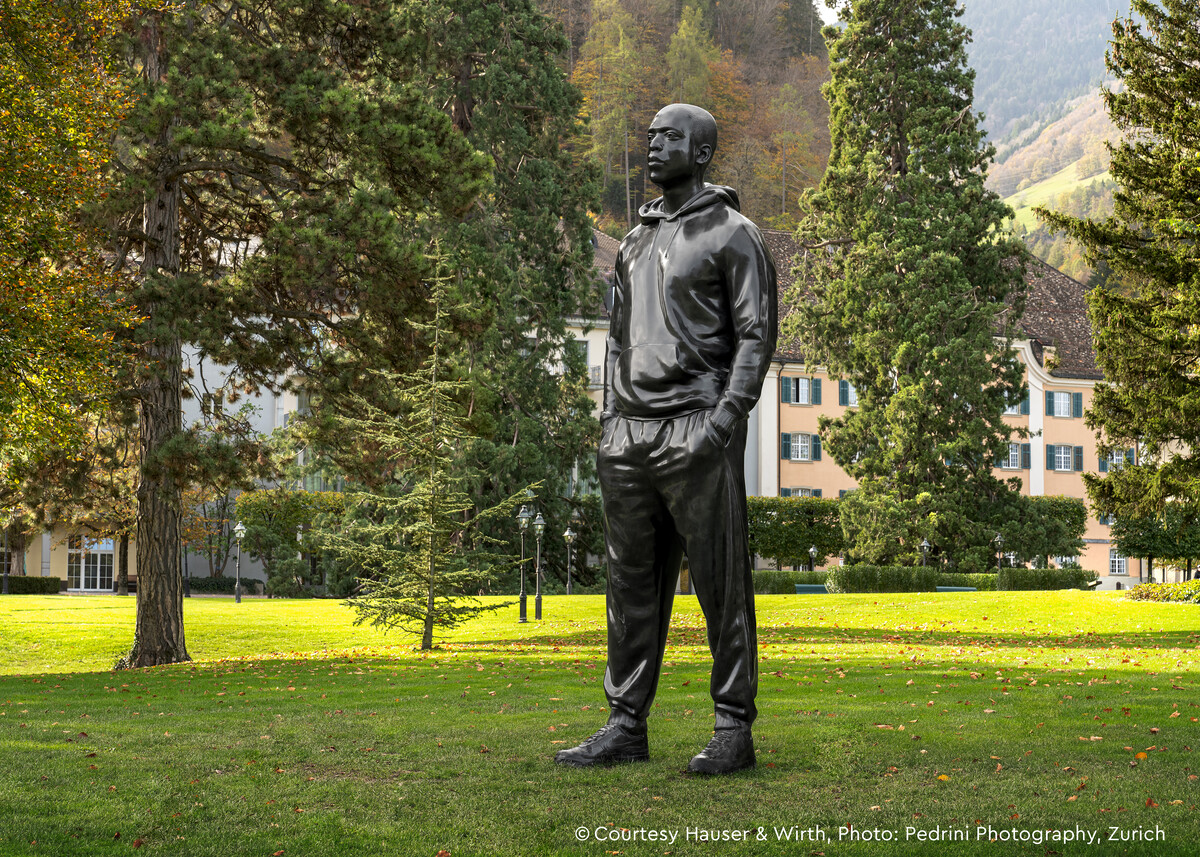
At 12ft in height, “All In” (2021) is not only Price’s largest figurative bronze sculpture to date, it is also his most unequivocal and powerful response to the history and legacy of statuary. By depicting a man wearing contemporary sportswear in bronze, Price has created an exceptional monument to humanity. Price works with traditional techniques and materials, to portray what the artist describes as ‘absolutely normal’ people.
Speaking on the significance of the clothing that his subjects wear, Price states: “I am interested in how people represented in my works are positioned in society and how they are affected by the action of those in power. So, for example, the hooded top. For one thing, it’s a very democratic item of clothing. It’s what everyone at some point has kind of worn, but the question is: when is it that you wear a hooded top? Maybe you wear it on the weekends if you’ve got an office job. It could be an incredibly expensive hooded top. But who is wearing it impacts how they are treated or received. People have been shot because they were wearing a hooded top and they were judged as suspicious. If I think back to when I was wearing hooded tops, I had the hood up because I was quite shy, and I didn’t want people to look at me.”
“All in” is on loan from a private collection.